How India’s Salaried Class is Carrying the Tax Burden?
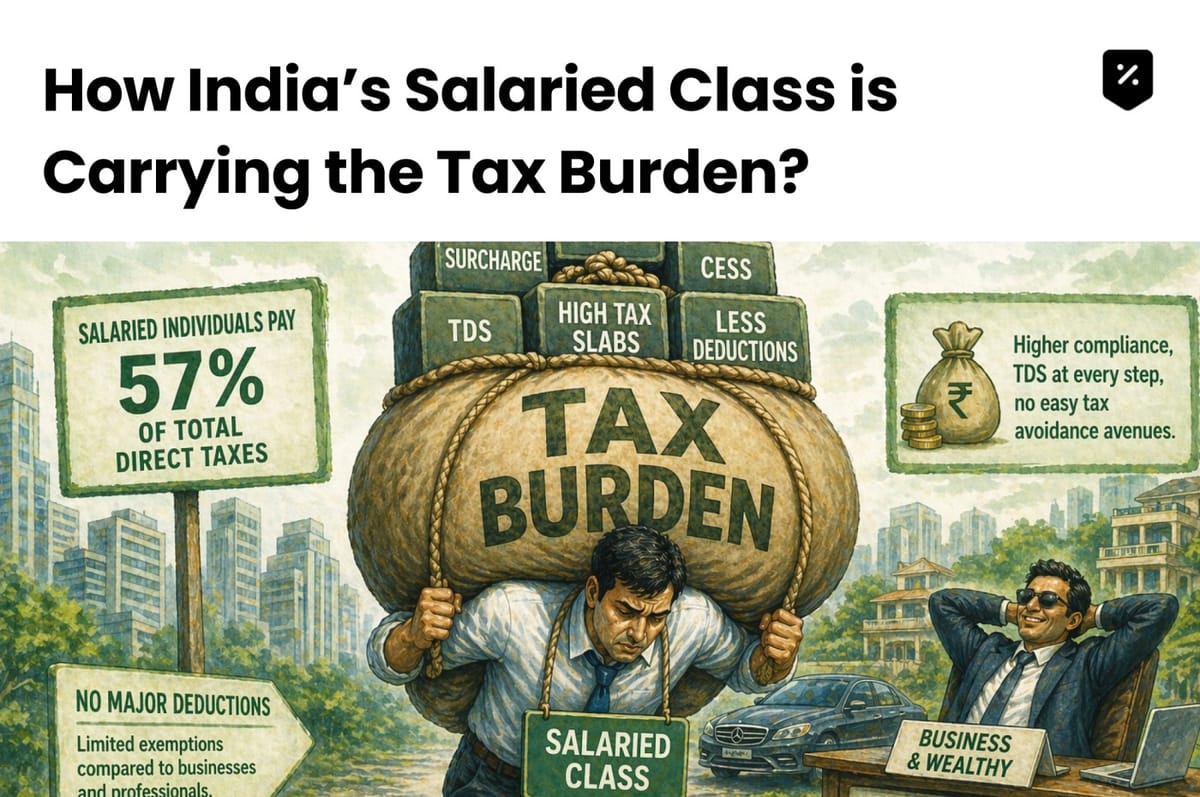
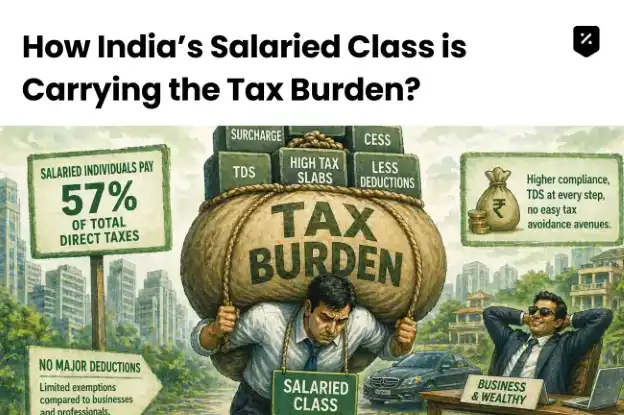
India is witnessing a historic fiscal inversion. For the first time, a tiny fraction of the population, the salaried middle class is contributing more in direct taxes than the entire corporate sector combined. While corporations utilize tax restructuring, R&D credits, and legal loopholes, the salaried professional is taxed at source (TDS) with zero room to maneuver.
The system is currently designed to extract from those with the least ability to restructure their income, while letting the most mobile wealth and the most shielded income categories walk away untouched.
In this edition, we will analyse:
- The Inversion: Why 3% of taxpayers out-contribute all of Corporate India.
- The Zero-Tax Shield: The ₹20 Crore agricultural income loophole.
- The Great Migration: How high-taxation is fueling a brain drain to Dubai and Singapore.
- The Fiscal Crisis: Why a concentrating tax base is a ticking time bomb.
1. The Inversion: Salaried vs. Corporate
In a healthy economy, corporate tax usually anchors the state’s revenue. In India, the burden has shifted decisively to the individual.

Despite record corporate profits, the effective tax rate for companies has dropped due to 2019 cuts, while the captive salaried class has seen no equivalent structural relief.
2. The Zero-Tax Shield: Structural Unfairness
While a professional earning ₹25 Lakh pays nearly ₹5-6 Lakh in taxes (plus GST on every purchase), massive segments of wealth remain invisible to the taxman.
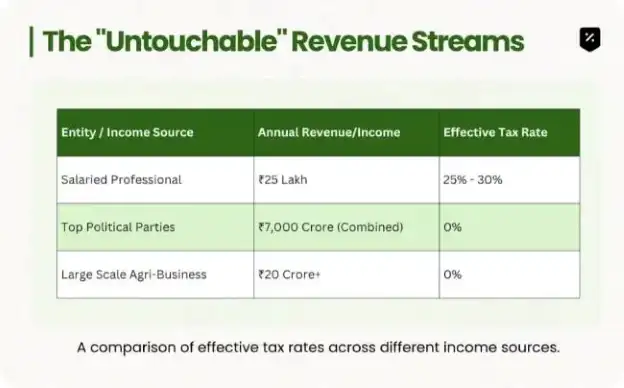
The system doesn't tax based on how much you earn, but how you earn it. Political and agricultural wealth are legally shielded, placing the entire nation-building bill on the urban workforce.
3. The Migration of the Mobile (Brain Drain)
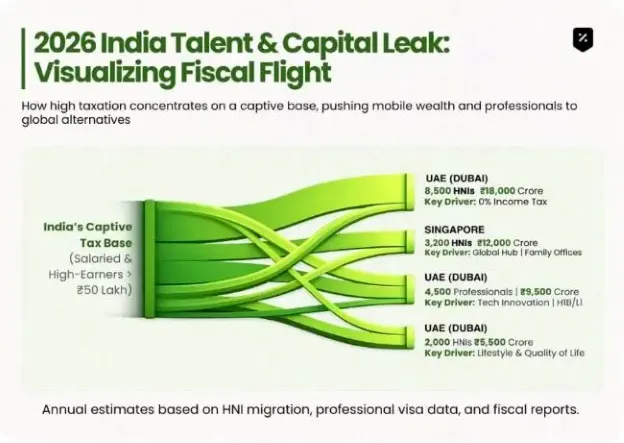
High-earning professionals are voting with their feet. The combination of high direct taxes, high indirect taxes (GST), and a lack of proportional social security is driving India’s top talent to tax havens.
A Fiscal Crisis in the Making
A tax base that concentrates on the few while allowing the most mobile and the most politically connected to exit is structurally unsound. When the most productive 3% of a nation feels like a "captive revenue source" rather than a stakeholder, the eventual outcome is a drain of both capital and talent.
At Per Annum, we track these shifts because they dictate where the next generation of wealth will be built. If the domestic environment remains extractive, the push toward Global Diversification and Alternative Assets becomes not just a choice, but a survival strategy.