5 Things to Check Before You Buy a Property Near Jewar Airport
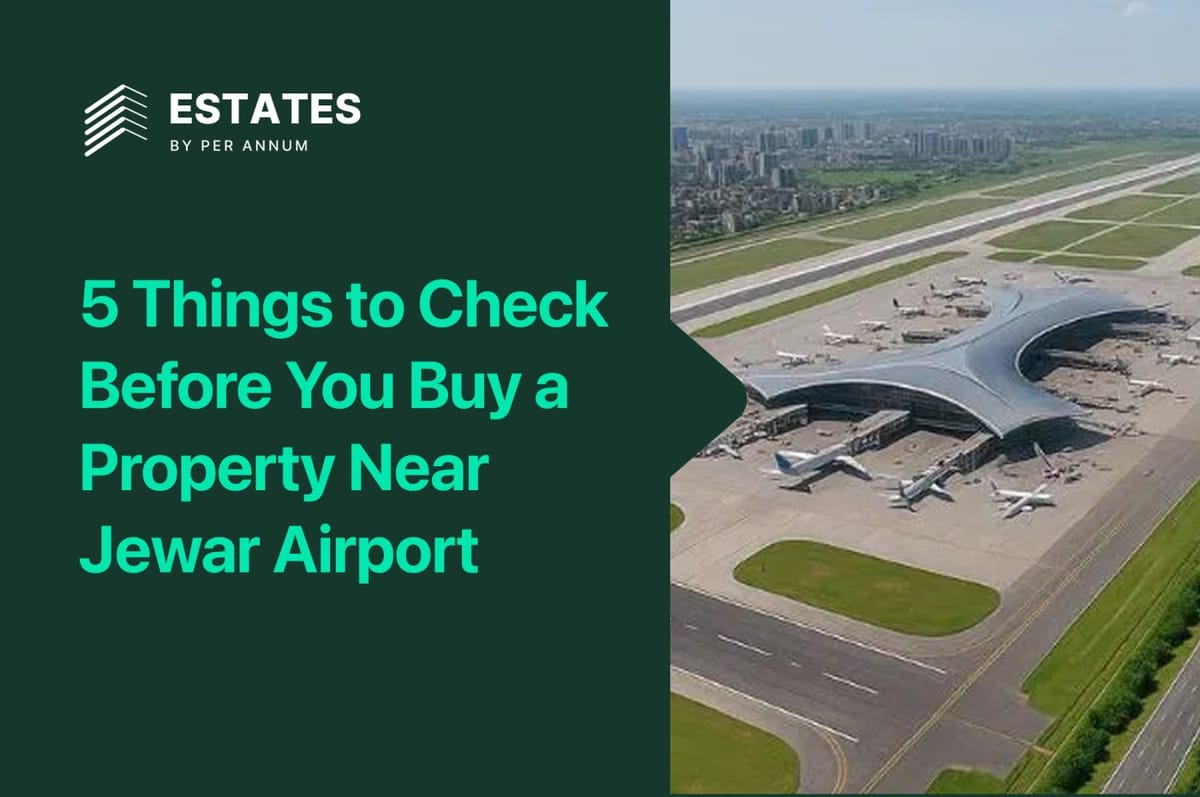

Ever since Noida International Airport was announced, the Yamuna Expressway region has become one of the hottest real estate markets in North India. Everywhere you look, developers and brokers are promoting the same message — buy now before prices rise further.
And honestly, the growth has been real. Property prices in many sectors have already increased significantly because the airport has completely changed the long-term potential of the region.
But rapid growth also creates confusion. Today, many buyers are being sold agricultural land as “future township property.” Unauthorised plotting projects are being marketed as premium airport investments, and some people are investing purely because a property is close to Jewar Airport without understanding whether it actually has long-term value.
That approach can be risky.
Here are five important things every buyer should check before investing near Jewar Airport.
Read More: What Are the Latest YEIDA Updates in 2026?
1. Make Sure the Property Falls Within an Approved YEIDA Sector
This should always be your first step.
The airport region is largely controlled by the Yamuna Expressway Industrial Development Authority (YEIDA), which manages zoning, infrastructure planning, and development approvals.
A common mistake buyers make is assuming that any land near the airport will automatically benefit from future growth. That is not true.
The area includes a mix of:
- Approved YEIDA sectors
- Agricultural land
- Village abadi areas
- Unauthorised colonies
- Privately divided plotting projects
Only properly planned and approved sectors are likely to receive organised infrastructure such as roads, utilities, commercial integration, and future transit connectivity.
A plot may be physically close to the airport but still remain outside the planned development ecosystem.
Before making any payment, always verify:
- Sector number
- Land-use category
- YEIDA approval status
- Allotment documents
If a seller avoids sharing clear documentation, consider it a warning sign.
2. Study Future Development Plans Around the Property
What surrounds a property in the future often matters more than what exists there today.
The airport is not being developed as a standalone project. The wider region is expected to include:
- Industrial corridors
- Warehousing hubs
- Logistics parks
- Commercial zones
- Residential townships
- Institutional developments
Not every location will benefit equally from this growth.
For example, residential sectors near industrial or commercial activity may see stronger demand because of employment generation. Meanwhile, isolated areas without planned connectivity may struggle despite being marketed as “airport-facing investments.”
This is why serious investors study the YEIDA Master Plan carefully.
It helps buyers understand:
- Which sectors are residential
- Which are industrial
- Planned metro and road connectivity
- Green belts and restricted-use zones
- Future public infrastructure locations
Buying based only on airport distance is shortsighted. Long-term appreciation usually happens where infrastructure, employment, and connectivity come together.
Read More: How Jewar Airport Will Impact Real Estate in Noida
3. Verify the Land Title Properly
This is one of the biggest risk areas in the Jewar market.
Many parcels being sold today come from village belts where ownership histories can be complicated. In some cases, land has changed hands informally over generations before entering the open market.
As a result, title disputes are more common than many buyers realise. Do not rely only on verbal assurances or basic paperwork.
A proper legal check should include:
- Previous sale deeds
- Mutation records
- Revenue documents
- Khasra details
- Encumbrance verification
- Acquisition status checks
One major issue buyers overlook is whether the land falls inside a future acquisition or government-notified zone.
There have been cases where people purchased land only to later discover it had already been marked for infrastructure expansion or legal action.
Fragmented ownership is another common problem, especially in village-origin land where multiple family heirs may have legal rights over the same parcel.
Professional legal due diligence may seem expensive initially, but it is far cheaper than dealing with disputes later.
4. Be Clear About Your Goal: Investment or End Use
Many buyers confuse long-term potential with present-day liveability. While development around Jewar Airport is moving quickly, several pockets are still in early stages. Some areas continue to have limited:
- Residential occupancy
- Retail infrastructure
- Public transport access
- Rental demand
- Social amenities
Because of this, many properties near the airport currently function more as long-term investment assets rather than ready-to-live residential options.
This distinction matters. Some buyers expect:
- Immediate rental income
- Fast resale opportunities
- Instant end-user demand
But infrastructure markets usually grow in phases.
Initially, prices rise because of future expectations. Real residential demand typically comes later once employment activity and population movement increase.
The region certainly has strong long-term potential, but patience is important. Before buying, define your objective clearly.
If you are looking for short-term gains, some sectors may already be priced aggressively. If your focus is long-term appreciation tied to infrastructure growth, the opportunity still remains attractive.
Read More: Top 5 Locations in Noida for Real Estate Investment (2026 Guide)
5. Focus on Real Execution
The Jewar region has already witnessed significant price appreciation because of proposed projects. However, there is a big difference between:
- Projects that are announced
- Projects that are approved and funded
- Projects that are actually under construction
Experienced investors focus on the third category.
The airport itself is a strong example because construction is actively progressing. Several roads, industrial projects, and supporting developments are also moving forward visibly.
At the same time, there are still projects being marketed heavily despite existing only on paper. Buying purely based on future promises can lead to years of stagnant growth if development slows down.
Before investing, check:
- Which infrastructure projects are physically underway
- Whether nearby sectors show real construction activity
- If industries and businesses are operational nearby
- Whether actual population movement has started
The strongest real estate markets are built through sustained economic activity — not just marketing campaigns.
Conclusion
Jewar Airport is expected to transform the Yamuna Expressway region over the coming decade. The scale of infrastructure and industrial investment planned around the project is massive.
But the market is becoming more mature now. A few years ago, almost any investment in the region benefited from early momentum. Today, success depends far more on selecting the right property carefully.
The most important factors are:
- Legal clarity
- Approved development alignment
- Infrastructure connectivity
- Long-term economic relevance
Simply buying near the airport is no longer enough.