Why Real Estate Prices Are Rising In Gurgaon?
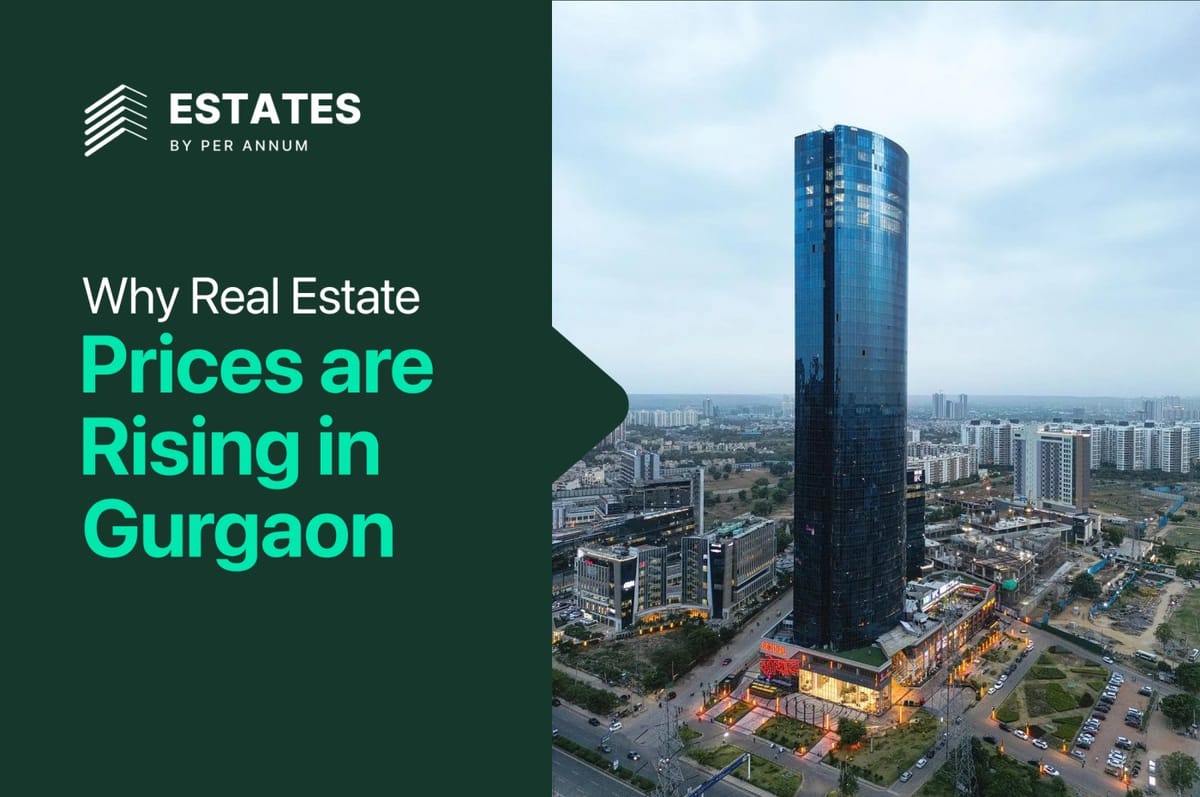
Gurgaon (Gurugram) has been one of India's fastest-moving real estate markets in recent years. Strong office leasing, big infrastructure projects and a surge of new premium launches have re-ranked several micro-markets, and pushed asking prices sharply higher in pockets such as Dwarka Expressway, Golf Course Extension Road and and parts of South/ New Gurgaon. This article explains what’s driving the rise, what experts are saying, how much of the move is genuine demand versus speculation, and what buyers and investors should watch next.
Explore: Why Real Estate Prices are rising in Delhi NCR
Property Prices in Gurgaon
- NCR residential asking prices rose to about ₹8,900 per sq. ft. in Q3 2025 (up 24% YoY). Gurugram / New Gurgaon remain the largest contributors to that rise.
- Prices along the Dwarka Expressway corridor roughly doubled between 2020 and 2024, from ₹9,400/sq. ft. to nearly ₹18,500 - 19,000/sq. ft. in leading sectors. Analysts forecast continued upside as connectivity projects complete.
- Multiple industry reports show a sharp skew toward luxury and ultra-luxury launches in NCR in 2024 - 25, the concentration of high-end supply has lifted average rates even where mid-segment launches have slowed.
What's Fuelling the Prices?
1) Strong office leasing and corporate demand
Gurgaon is among India’s largest office markets and saw record leasing volumes in 2025, both multinational and large domestic occupiers expanded, driving demand for employee housing close to office clusters. Institutional occupier activity (IT/ITES, consulting, GCCs) has been particularly strong and supports sustained residential demand nearby.
2) Major infrastructure re-rating suburbs
Completion and commissioning of highways, expressways and metro/rail projects (for example, the Dwarka Expressway and improved last-mile links) have materially shortened travel times to Delhi, the airport and employment nodes. When a previously peripheral micro-market becomes commutable, prices re-rate quickly, Dwarka Expressway is the textbook example.
3) Product mix: more premium launches than affordable stock
Several industry studies show new supply in NCR skewed to higher ticket sizes, branded residences and luxury projects made up a large share of recent launches. With fewer launches in the affordable segment, the region’s average price has increased even when unit sales volumes moderate.
4) Limited developable land and rising input costs
Gurgaon’s available land parcels close to good infrastructure are limited. Scarcity pushes prices up, and higher construction/material costs are passed to buyers at launch. Recent proposals to raise circle rates in Haryana will also affect transaction costs and can accelerate headline price inflation.
5) HNI / NRI and investor flows into the luxury segment
A material portion of recent demand has come from high-net-worth individuals and NRIs buying larger homes and premium product, a cohort that is less sensitive to short-term rate moves and looks more at long-term wealth preservation. This has amplified the premium segment.
What are the Real Estate Experts Saying?
- Industry trackers such as Anarock and local market reports point to a deliberate shift in launches toward luxury segments and note that while transactions have softened in some subsegments, average prices are rising because new supply is expensive.
- Brokerage and advisory houses (JLL, Colliers) highlight record office leasing and suggest demand for housing around office clusters will remain supportive as occupiers expand their footprints.
Speculation vs Demand: How much is sustainable?
- Real demand (end-users + corporate employees): strong. Leasing, new job creation and commuters’ need for better housing underlie real, sustainable demand. Reports show large leasing volumes and relocation activity that support nearby residential markets.
- Investor/speculative flows: present, concentrated in a few micro-markets where expectations of rapid re-rating are high. When launches focus on luxury stock and mid-segment supply lags, headline prices rise even if overall absorption is mixed.
Scarcity of Land and Increased Investor Activity
- Limited developable land near premium corridors (Golf Course Road/Golf Course Extension/Dwarka Expressway) tightens future supply and increases developers’ land acquisition costs. That scarcity is a long-term structural reason prices stay elevated.
- High investor interest in luxury formats and in corridors undergoing re-rating has amplified demand. This investor participation, especially from NRIs/HNIs, is a multiplier effect on top of genuine end-user demand.