What is RERA Act Explained: Rules, Regulations, and Homebuyer Rights
Learn what the RERA Act is, why it's important, and how it protects homebuyers. Understand RERA rules, registration, compliance checks, and buyer benefits before investing in real estate.

Over the past decade, the Indian real estate landscape has witnessed a significant transformation. Gone are the days of opaque deals and endless delays. This shift is largely driven by the Real Estate Regulation and Development Act, 2016, popularly known as RERA.
Designed to in still transparency, accountability, and trust, RERA has become the ultimate safety shield for buyers and a mandatory framework for developers.
If you are planning to buy a home in 2026, understanding RERA is not optional, it is essential. Here is everything you need to know about the act, its benefits, and how to use it to protect your investment.
What is the RERA Act?
The Real Estate (Regulation and Development) Act, 2016, commonly referred to as RERA, is a central legislation enacted to regulate the real estate sector and protect homebuyers from malpractices. It establishes a regulatory authority in every state and union territory to ensure project transparency, timely delivery, and accountability from developers.
Key Provisions under the RERA Act
- Mandatory registration: No developer can advertise, market, book, or sell any plot or apartment without registering the project with the state RERA authority.
- The 70% Escrow Rule: Developers must deposit 70% of the funds collected from buyers into a separate escrow bank account. This money can only be used for construction and land costs, preventing funds from being diverted to other projects.
- Standardised Carpet Area: Developers must sell apartments based on "carpet area" (the actual usable area), not the vague "super built-up area".
- Defect Liability: Developers are responsible for fixing structural defects for 5 years after possession.
- Compensation for Delays: If possession is delayed, the builder must pay interest on the amount paid by the buyer (usually SBI MCLR +2%).
RERA Registration and Fees (Indicative)
All ongoing and new real estate projects must be registered under RERA before advertising and selling units. The registration fee varies by state and is usually calculated based on the project area and type (residential, commercial, mixed use)
| Project Type | Average Registration Fee Structure (Indicative) |
| Residential (Low Area) | ~₹10 per sq. meter (up to 1,000 sq. meters) |
| Residential (High Area) | ~₹20 per sq. meter (above 1,000 sq. meters) |
| Commercial / Mixed | ~₹50 to ₹100 per sq. meter |
| Real Estate Agents | ₹10,000 (Individual) to ₹50,000 (Firm) |
Note: These are indicative rates; actual charges differ across states.
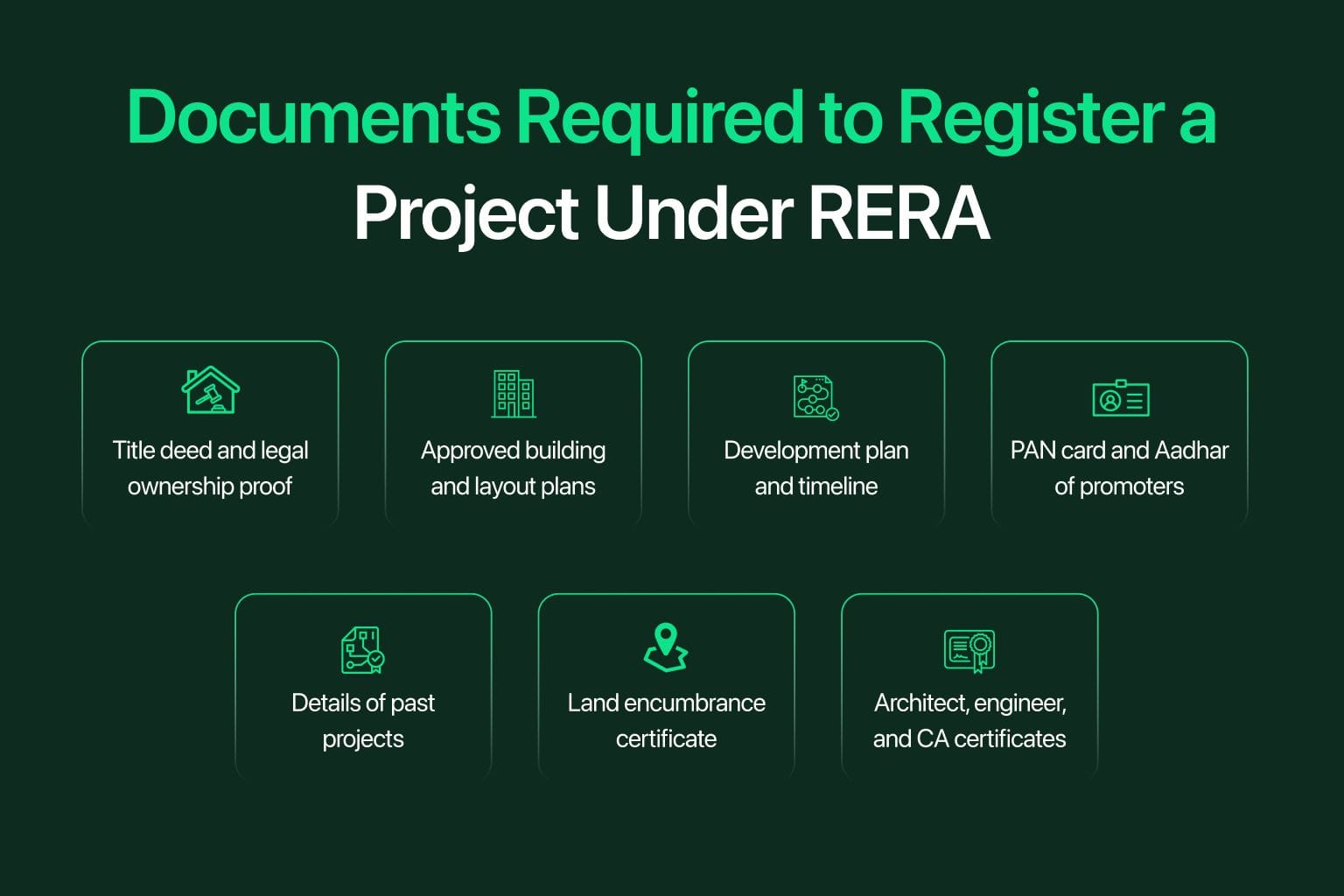
Documents Required to Register a Project Under RERA
- PAN Card & Aadhaar of the promoters.
- Audited Balance Sheets of the promoter for the preceding 3 financial years.
- Title Deed and legal ownership proof of the land.
- Encumbrance Certificate (proving the land is free from legal dues).
- Approved Layout Plans (Sanctioned plan, layout plan, and specifications).
- Development Timeline (Proposed date of completion).
- Engineer & Architect Certificates.
Penalties and Charges Under the RERA Act
| Offense | Penalty |
| Non-registration of project | Up to 10% of the project cost |
| False information/disclosure | 5% of the estimated cost of the project |
| Delay in possession | Compensation plus interest to the buyer |
| Continued non-compliance | Additional daily fines and possible jail term |
Projects That Come Under RERA
- Residential and commercial projects over 500 sq. meters or with more than 8 units
- Ongoing projects without a completion certificate
- All types of plots, apartments, buildings intended for sale
How to Check if a Property is RERA Compliant
Never book a flat without verifying its RERA status. Here is a step-by-step guide:
- Visit the State Portal: Go to your state's official RERA website (e.g., haryanarera.gov.in or maharera.maharashtra.gov.in).
- Find the Search Bar: Look for a tab labeled "Registered Projects" or "Search Project."
- Enter Details: Type in the Project Name, Builder Name, or the RERA Registration Number provided by the sales agent.
- Verify Documents: Once the project appears, click to view the uploaded approvals, litigation history, and the promised completion date.
Official RERA Website Links (Major States)
- Maharashtra: maharera.maharashtra.gov.in
- Karnataka: rera.karnataka.gov.in
- Uttar Pradesh: up-rera.in
- Haryana: haryanarera.gov.in
- Tamil Nadu: rera.tn.gov.in
How to find RERA-Approved Projects
- Use the “Registered Projects” section on your state RERA website.
- Verify project name, developer credentials, and uploaded documents.
- Confirm possession timelines and construction status updates.
How RERA Impacts Real Estate Agents
RERA mandates real estate agents to register themselves before facilitating any sale in registered projects. Agents must:
- Provide accurate information
- Maintain records of transactions
- Not mislead buyers
Non-compliance can lead to suspension, penalties, or debarment from practise.
How Does RERA Benefit Buyers?
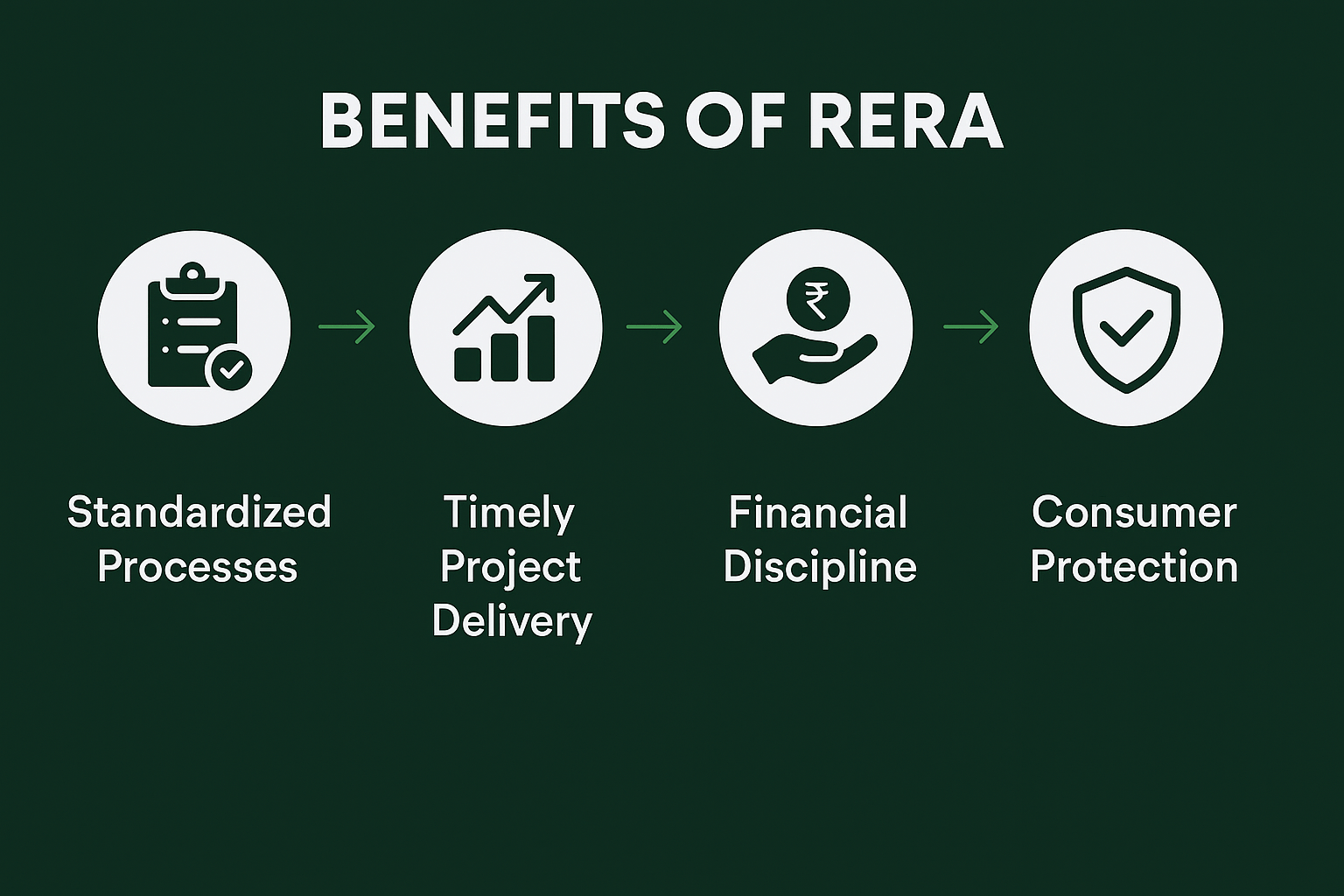
- Transparency: Buyers know what they're paying for, including timelines and approvals.
- Accountability: Builders are bound by law to deliver what they promise.
- Protection: Legal recourse and refund rights in case of violations.
- Better decisions: Access to all critical data like layout, RERA number, and project updates.
Should you buy a Non-RERA Registered Property?
The short answer is: No.
Investing in an unregistered project carries high risks:
- No Legal Backing: RERA tribunals cannot help you if the project isn't registered.
- High Fraud Risk: There is no guarantee the builder owns the land or has approvals.
- Indefinite Delays: Without RERA's timeline pressure, construction may stall for years.
RERA Rules: An Overview
- Developers must register before any promotion or sale.
- Buyers are entitled to full disclosure of project details.
- Project delays make builders liable to refund with interest.
- Builders cannot alter plans without buyer consent.
- All brokers and real estate agents must also be registered.
Frequently Asked Questions (FAQs)
Q1 - Is RERA applicable to all real estate projects?
A - No projects under 500 sq. meters or with fewer than 8 units are exempt unless the builder opts in.
Q2 - Can a buyer file a complaint online?
A - Yes, most state RERA portals allow online grievance redressal.
Q3 - How do I verify a builder's credibility under RERA?
A - Search their past projects and compliance status on the RERA portal.
Q4 - What if a builder fails to register under RERA?
A - They are subject to penalties and buyers can file complaints.
Q5 - Are RERA judgments enforceable?
A - Yes. Order from RERA and the appellate tribunal are legally binding.