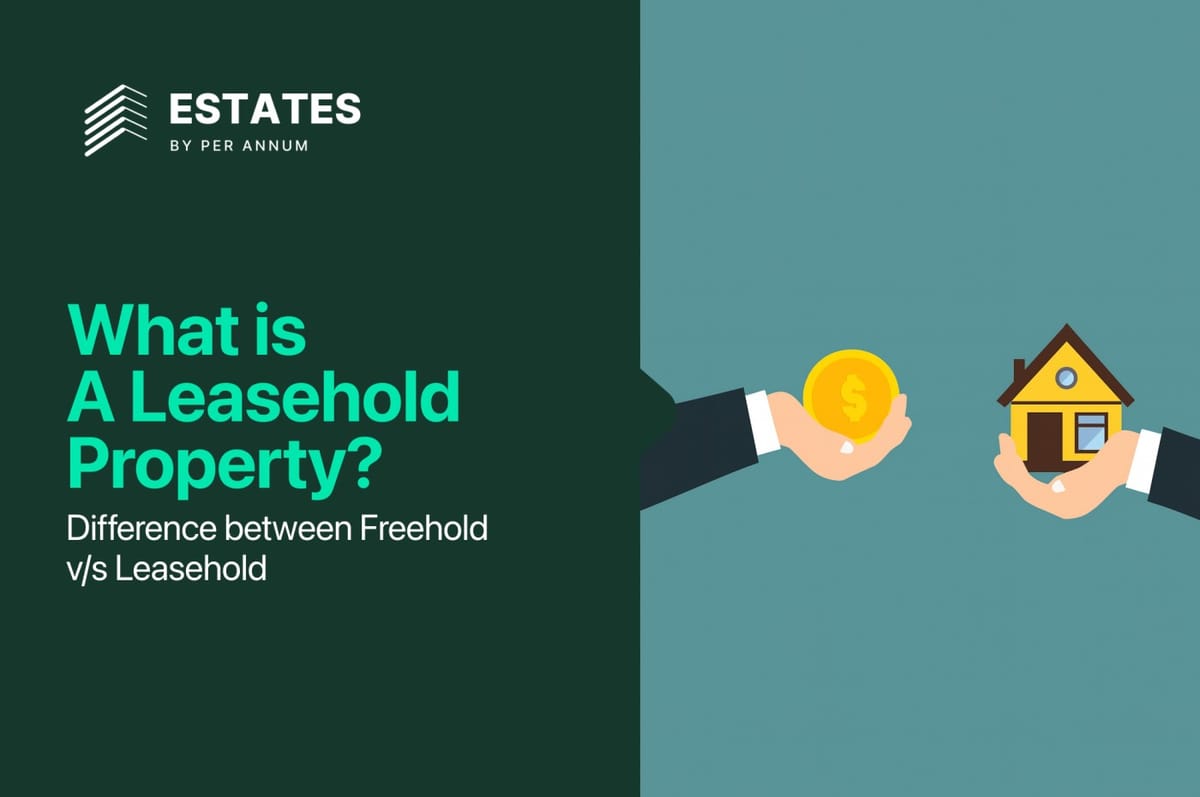
What Is a Leasehold Property? Difference Between Freehold vs Leasehold
Real estate ownership in India is governed not just by the property you buy, but also by the nature of the land tenure. When you begin exploring options, you will often hear developers, brokers and banks refer to properties as either leasehold or freehold.
This distinction shapes everything; ownership rights, resale value, financing, and long-term security. Understanding what a leasehold property really is, and how it differs from freehold, is essential for making an informed decision.
What Is a Leasehold Property?
A leasehold property is one where you purchase the rights to occupy and use the property for a defined period, but you do not own the land. The land is owned by a government authority or institutional body (such as DDA, NOIDA Authority, HUDA, CIDCO, GMADA, etc.), which leases it out for 30, 60, 90, or 99 years.
You become the lessee, whereas the authority remains the lessor and retains ultimate ownership.
During the lease period, you can live in the property, rent it out, or sell the leasehold rights to someone else subject to the terms of the authority. Once the lease expires, the owner must apply for renewal and pay lease extension fees or ground rent.
Leasehold properties are common in high-demand urban markets where most land belongs to government agencies.
How Leasehold Ownership Works
When you buy a leasehold property:
- You own the structure, but not the land.
- You receive ownership rights for a fixed number of years.
- You may be required to pay recurring ground rent or lease rent.
- Certain modifications may require approval from the land authority.
- Transfer or resale sometimes requires additional permissions and charges.
If the lease period has less than 20-30 years remaining, banks may hesitate to offer home loans, making financing and resale more challenging.
Advantages of Leasehold Property
Leasehold properties are often more affordable compared to freehold because the land is not being purchased outright. This makes them accessible to first-time homebuyers or those looking for lower entry points in high-value localities.
Another advantage is access to prime locations. Many central zones in Noida, Delhi, Chandigarh, Navi Mumbai and Pune are built entirely on leasehold land owned by development authorities. Buying a leasehold property in such locations still offers strong lifestyle and rental benefits.
In some cases, leasehold properties can be converted to freehold by paying conversion charges, significantly improving their resale value.
Limitations of a Leasehold Property
The biggest concern is ownership uncertainty. Since the land is never fully yours, the property is bound by the authority’s conditions. Renewal of lease periods can be expensive and time-consuming, and in rare cases, ownership disputes may arise if payments are not made on time.
Banks also evaluate leasehold properties more cautiously, especially older ones. Properties with diminishing lease tenure may face difficulty securing financing or attracting buyers.
Many homeowners also find the approval process restrictive, as even basic alterations to the structure may require the lessor’s consent.
Freehold vs Leasehold Property: Key Differences Explained
Although both types look similar at first glance, their long-term implications are entirely different.
Ownership
Freehold gives you absolute ownership of both land and structure.
Leasehold gives you time-bound rights only to the structure, while the land belongs to the authority.
Tenure
Freehold has no expiry.
Leasehold involves a fixed tenure (30-99 years) that must be renewed.
Price
Freehold properties usually cost more because land ownership is included.
Leasehold properties are cheaper initially but may involve renewal or ground rent charges.
Financing
Banks strongly prefer freehold.
Leasehold with a short remaining tenure may face loan restrictions.
Transfer & Resale
Freehold transfers are straightforward.
Leasehold transfers may require permission from the authority and additional charges.
Long-Term Value
Freehold generally appreciates better over time.
Leasehold may see lower appreciation due to limited tenure and buyer hesitation.
Should You Buy a Leasehold Property?
If you want long-term stability, higher appreciation and full control, freehold remains the better choice. It is ideal for end-users, investors, and anyone planning to pass the asset to the next generation.
Leasehold can still be worthwhile if:
- You are purchasing in a prime location at a lower cost.
- The lease tenure remaining is long (50+ years).
- The authority allows conversion to freehold in the future.
Leasehold becomes risky when the remaining tenure is short or when approval processes are unclear.