What are REITs and are They a Good Investment Option?
Learn how REITs work, their benefits and risks, and whether they’re a smart investment in India.

For many retail investors, real estate has long been out of reach, requiring long-term commitments, and active management. Enter REITs: Real Estate Investment Trusts, a game-changing way to invest in real estate without the burden of property ownership. But are they worth your money? This blog answers that and more, taking you through how REITs work, how to evaluate them, and whether they fit into your portfolio.
Understanding REITs:
A REIT is a company that owns, operates, or finances income-producing real estate. It pools money from investors and uses it to buy properties like malls, office buildings, warehouses, or even data centres. The investor can buy shares in a REIT just like stocks, and earn returns through dividends and capital gains, all without dealing with tenants, brokers and paperwork.
To qualify as a REIT in India, a company must:
- Invest at least 80% of its assets in completed, revenue-generating properties
- Distribute 90% of its rental income as dividends to shareholders
- Be listed and regulated by SEBI.
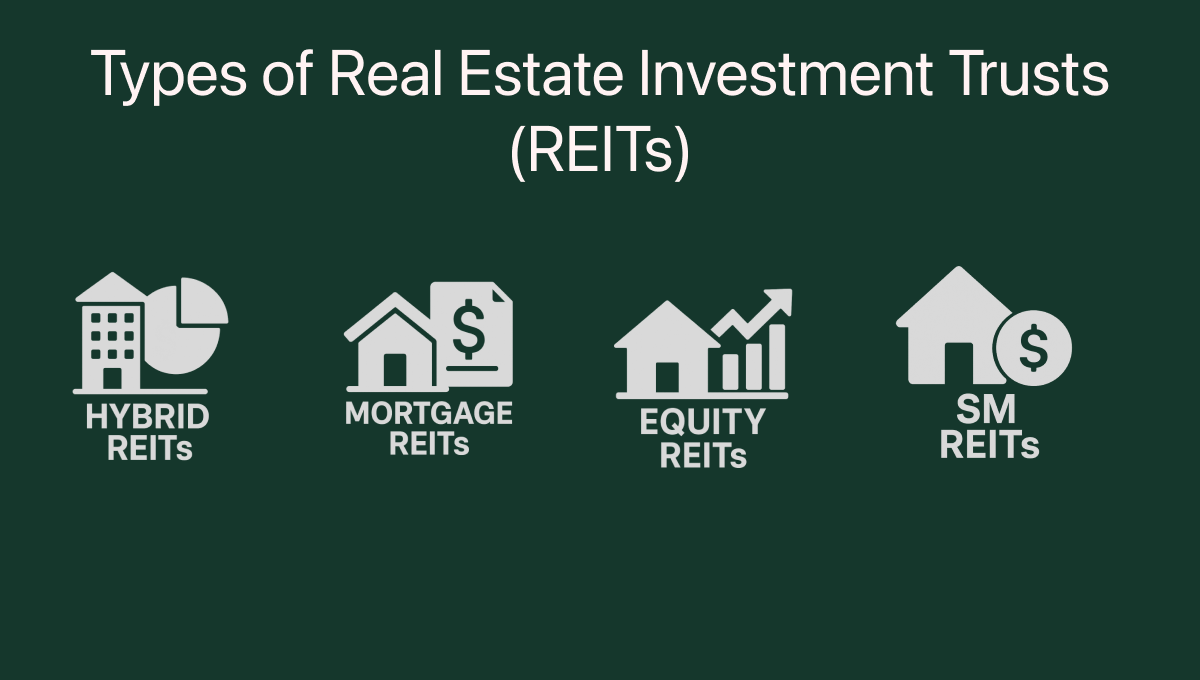
Types of Real Estate Investment Trusts (REITs)
REITs may seem straightforward, typically associated with owning large commercial buildings, but they come in several forms that cater to different investment strategies:
Equity REITs:
These REITs own and manage income-generating real estate such as office, parks, malls, and residential communities. Investors earn through both rental income distributed as dividends and potential value appreciation of the underlying assets.
Mortgage REITs:
Rather than owning properties, they invest in real estate debt, either through mortgages or mortgage-backed securities. The income here comes from interest on these financial instruments, not rent.
Hybrid REITs:
Combining the features of both equity and mortgage REITs, they own properties while also holding mortgage-related assets, offering a diversified stream of income.
SM REITs:
They are a relatively new category in India. These are designed to open up real estate investment in smaller, curated projects, accessible through private placement. Typically unlisted, SM REITs allow investors to hold fractional stakes in mid-sized real estate portfolios, making them suitable for those looking for targeted exposure with potentially higher yields, albeit with lower liquidity than public REITs.
What Makes a REIT Worth Your Time?
Before jumping in, assess a REIT's financials like you would any stock. Look at:
- Yield Performance: What's the dividend payout relative to the share price?
- Occupancy Rates: Are the REIT's properties consistently rented out?
- Lease Terms: Long-term leases with strong tenants suggest stability
- Asset Quality: Grade-A office spaces or logistics parks perform better than aging buildings.
- Geographical Exposure: REITs with assets in tech hubs like Banglore or Hyderabad tend to perform better.
The Good and the Bad of REIT Investing
The Upside of REITs
- Low Entry Barrier: REITs allow you to start with as little as ₹10,000, opening doors to high-value commercial assets previously out of reach for most individuals.
- Consistent Income: Since REITs must distribute a large share of their rental earnings, they offer dependable dividend payouts, ideal for income-focused investors.
- Liquidity: Unlike physical real estate, you can buy or sell REIT units through stock exchanges with minimal paperwork.
- Professional Management: Properties are maintained and leased by experienced professionals, saving you the hassle of direct management.
- Regulated and Transparent: Being SEBI-regulated, REITs bring accountability, regular disclosures, and investor protection.
- Diversification: Adding REITs to your portfolio helps spread risk across real estate and real estate and equity, balancing growth and stability.
The Trade-offs and Risks
- Market Volatility: REIT prices can swing with overall market sentiment, even if the real estate performs well.
- Limited Capital Appreciation: REITs are income-oriented; their share prices don't always reflect real estate value growth.
- Occupancy Risk: Vacant offices or short lease terms can reduce rental income, directly affecting dividends.
- Lack of Control: You don't get to choose tenants, manage the property, or influence decisions, you're simply a unit holder.
- Tax Implications: Dividends are taxed based on your income slab, which may lower net returns for high-income investors.
How to Start with REITs as a Beginner
Getting started with REITs is simple, even for first-time investors. Here's a step-by-step breakdown:
Step 1: Open a Demat and Trading Account
You'll need brokerage account to buy publicly listed REITs, just like you would for stocks. Choose a platforms that supports NSE or BSE trading.
Step 2: Research listed REITs
Look into REITs like Embassy office parks, Business Parks, and Brookefield India. Evaluate them based on dividend history, occupancy rates, lease tenure, location of assets.
Step 3: Start with a Small Investment
Begin by allocating a modest portion of your portfolio (5-10%) to REITs. This helps you get a feel for how they behave during different market conditions.
Step 4: Consider SM REITs for Curated Exposure
If you're open to exploring private placements, platforms offering SM REITs provide access to smaller projects with higher yield potential. These are ideal if you're looking beyond public markets.
Step 5: Track Performance Regularly
Monitor dividend payouts, occupancy updates, and NAV changes through your trading platform or financial news apps. REITs are passive but require periodic review.
Step 6: Rebalance as Needed
Depending on your investment goals, adjust your allocation to REITs over time. If they're delivering steady income and fit your risk profile, increasing exposure might make sense.
Are REITs Safe During a Recession?
REITs are not immune to economic downturns. However, those with diversified assets, strong tenant profiles, and leases in essential sectors like logistics or IT hubs often hold up well. In times of crisis, they may see short-term dips, but the rental income often remains stable, making them a decent buffer compares to more volatile stocks.
Can you Invest in REITs Through a Retirement or SIP Account?
In India, REITs are not currently part of EPFor NPS portfolios. But you can invest in REIT mutual funds or ETFs that give indirect exposure. SIP into REIT-focused mutual funds are also a good entry point for passive investors looking for compounding over time.
Tracking and Exiting your Investment
REIT units are listed like any stock. Performance can be tracked via NSE/BSE , financial apps, or your brokerage platform. Metrics like Net Asset Value (NAV), occupancy rate, and dividend history will tell you how your REIT is doing.
To exit, you simply sell your units in the stock market. For SM REITs or private platforms, exit timelines depend on lock-in periods and secondary market availability.
Fees and Taxation
Investors pay brokerage charges and may face exits loads in mutual fund-linked REITs. Dividends from REITs are taxable in your hands as per your income slab.
Long-term capital gains (LTCG) from the sale of listed REIT units are tax-free up to ₹1.25 lakh. If your gains exceed ₹1.25 lakh on transfers made before July 23, 2024, the excess is taxed at 10%. For transfers made after July,23, 2024, the tax rises to 12.5% on gains exceeding the ₹1.25 lakh threshold.
Top REIT Players in India
Currently, the big three are:
- Embassy Office Parks REIT - India's first listed REIT, with assets in Bangalore and Pune.
- Mindspace Business Parks REIT - Focused on Mumbai, Hyderabad, and Pune
- Brookefield India REIT - With premium commercial assets in Mumbai, Gurugram, and Noida
These REITs offer strong fundamentals, professional management, and regular dividends.
Alternatives to REITs
While REITs offer an accessible way to invest in real estate, they aren't the only option for property-focused investors. Here are a few popular alternatives.
Direct Real Estate Investment:
Buying physical property offers complete control and potential for significant capital appreciation. It's ideal for long-term investors who don't mind managing tenants or property maintenance. However, it requires substantial upfront capital and comes with liquidity constraints.
Fractional Ownership Platforms:
These platforms allow investors to co-own premium properties by contributing smaller amounts, starting from ₹10,00,000. You earn rental income and benefit from capital appreciation, similar to REITs but with more control over individual properties.
Real Estate Mutual Funds and ETFs
These funds invest in real estate-related stocks, REITs, or infrastructure projects. They offer diversification and professional management, suitable for those looking to gain sector exposure without buying property.
Infrastructure Investment Trusts (InvITs)
Similar to REITs but focused on Infrastructure assets like highways, power transmission, and telecom towers. They offer stable income but are influenced by government policy and sector-specific risks.
Each alternative carries its own risk-reward profile. Investors should align their choice with their financial goals, risk tolerance, and liquidity preferences.