Luxury Apartments vs Builder Floors for Investment
As Indian real estate markets mature, investors are no longer choosing property types purely on price or location. The decision between luxury apartments and builder floors has become more nuanced, especially in markets like Gurgaon, South Delhi, Noida, and parts of Mumbai. Both formats attract different buyer profiles and behave differently during market cycles. From an investment standpoint, the choice depends on risk tolerance, capital horizon, and exit expectations.
What Defines A Luxury Apartment?
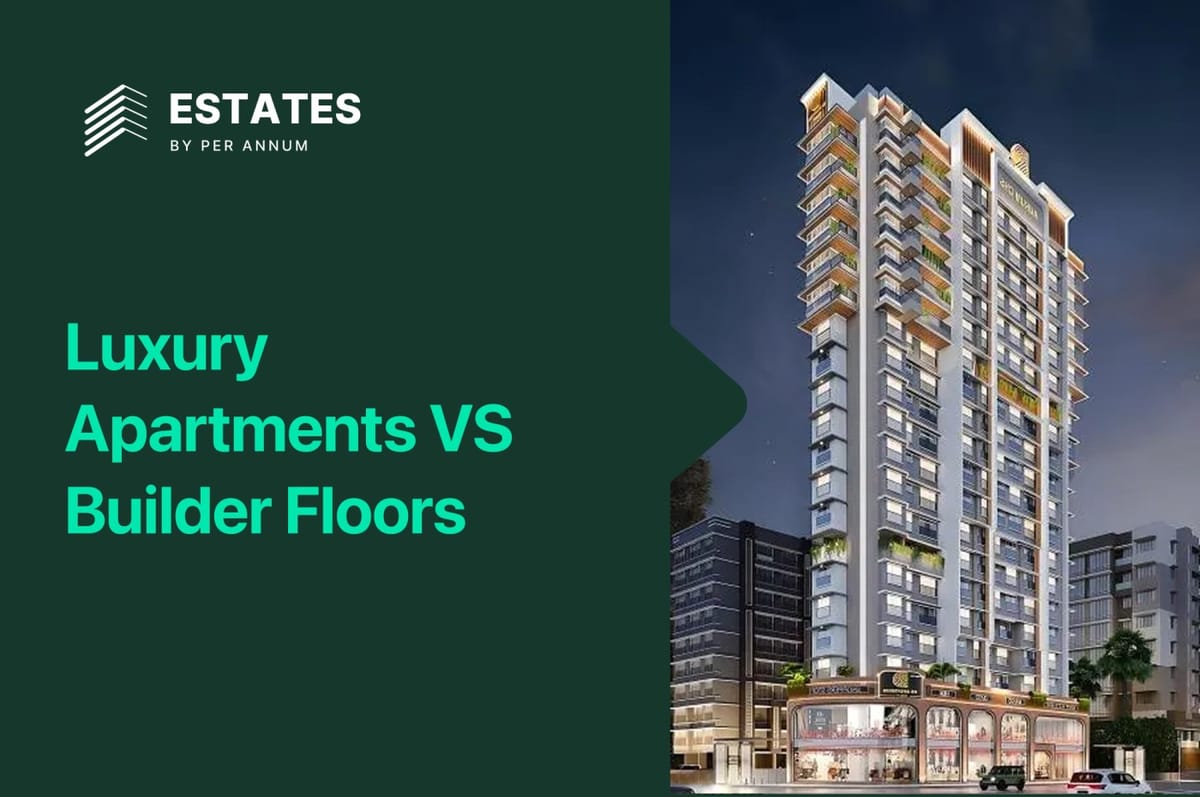
Luxury apartments are typically part of large, professionally developed residential communities. They are built by established developers, follow standardised layouts, and come with common amenities such as security, parking, clubhouses, landscaped spaces, and facility management. These projects are usually registered under the Real Estate Regulatory Authority, making them easier to finance and transact.
For investors, luxury apartments offer a structured and predictable asset class, where pricing, resale benchmarks, and demand patterns are relatively transparent.
What is a Builder Floor?
Builder floors are low-rise residential units, usually one apartment per floor, constructed on plotted land. They are most common in low-density residential sectors of Delhi NCR and select urban pockets elsewhere. The appeal of builder floors lies in privacy, independent access, and a higher share of land ownership compared to high-rise apartments.
However, builder floors are less standardised. Construction quality, approvals, and long-term maintenance vary significantly from one project to another, making due diligence far more critical.
Capital Appreciation: How They Perform Over Time
Luxury apartments generally show steady and consistent price appreciation, driven by developer brand, location infrastructure, and broader market sentiment. In premium corridors, appreciation is often gradual but resilient, even during slower market phases.
Builder floors tend to be more land-value driven. In mature localities where land supply is limited, prices can rise sharply during bullish cycles. However, appreciation is less predictable and highly sensitive to micro-market demand, redevelopment potential, and regulatory changes.
Liquidity and Exit Considerations
Liquidity is where luxury apartments have a clear advantage. They appeal to a wider pool of buyers, including end-users, non-resident Indians, and institutional investors. Documentation is usually standardised, making resale faster and smoother.
Builder floors attract a narrower buyer base. While demand can be strong in prime neighbourhoods, resale transactions often take longer, and price discovery can be subjective. Investors should be prepared for longer exit timelines.
Risk and Regulatory Comfort
Luxury apartments developed by reputed builders typically carry lower legal and execution risk. Title clarity, RERA compliance, and structured possession timelines provide a degree of comfort, particularly for passive investors.
Builder floors involve higher regulatory and construction risk. Title verification, building approvals, and adherence to local by-laws require careful scrutiny. For investors without strong local expertise, this can increase exposure to unforeseen issues.
Rental Demand and Income Stability
Luxury apartments benefit from professional maintenance and lifestyle amenities, which attract corporate tenants and higher-income households. While rental yields may not be very high relative to property value, income stability tends to be better.
Builder floors can command strong rents in certain localities due to privacy and low density. However, vacancy risk is higher, and rental income can be inconsistent, especially if maintenance standards decline over time.
Maintenance and Asset Longevity
High-rise luxury developments have structured maintenance systems funded through monthly charges. While these costs are higher, they help preserve asset quality and resale value.
Builder floors may have lower regular expenses but lack centralised management. Over time, inconsistent upkeep can affect both rental demand and capital value.