Is Fractional Ownership Legal In India? Key regulations you need to know.

Fractional ownership is revolutionizing real estate investment, allowing multiple investors to co-own high-value properties and earn returns without the burden of full ownership. This model has gained popularity in India, especially in the commercial real estate segment.
However, with its rising adoption comes the question of legality, how is fractional ownership regulated, and what should investors be aware of?
This blog will break down the key regulations governing this investment model in India.
What is Fractional Ownership?
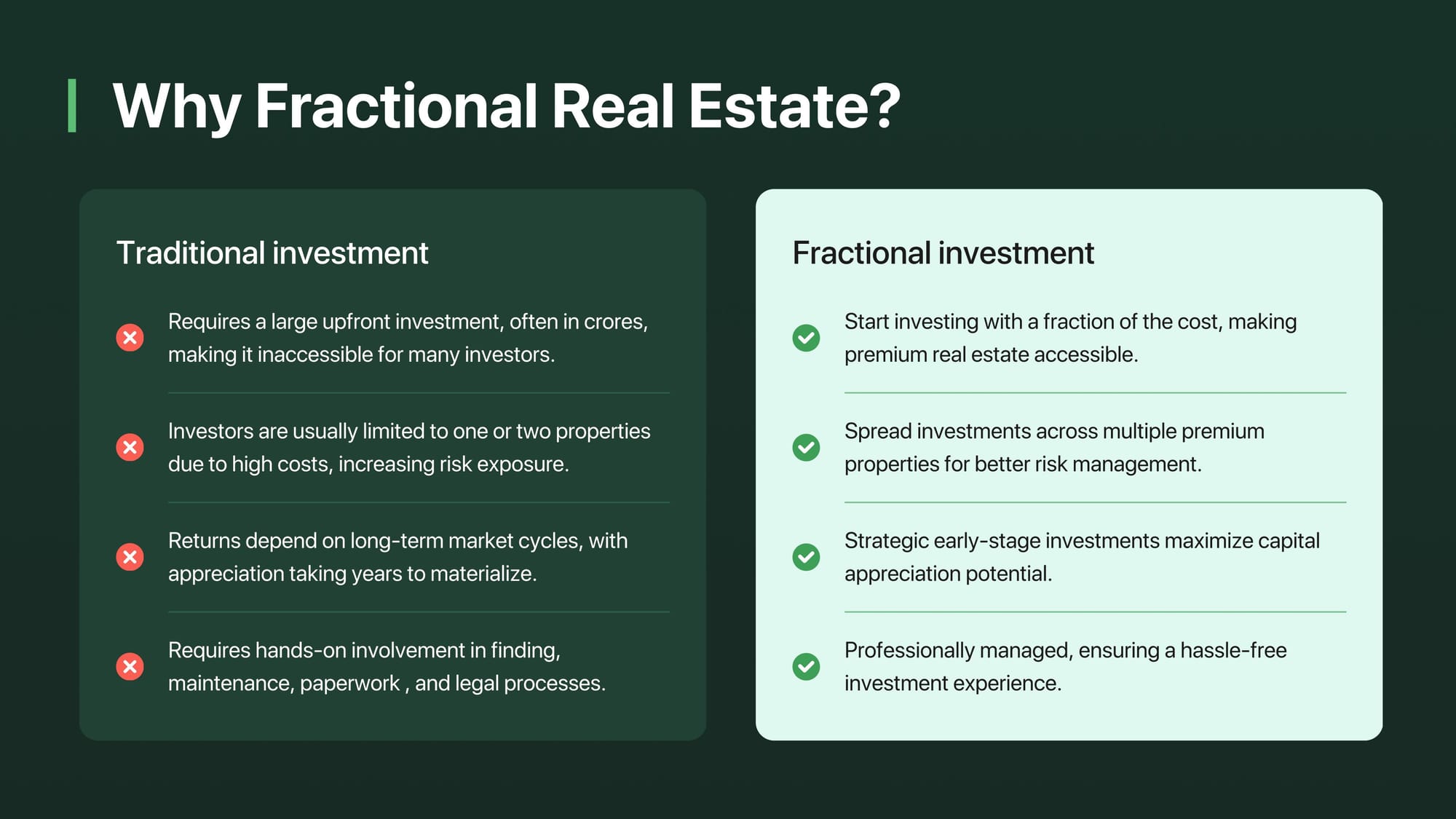
Fractional ownership is an innovative real estate investment model that allows multiple investors to collectively own a high-value property by purchasing a fraction of it. Instead of bearing the financial burden of purchasing an entire asset, investors can contribute smaller amounts and acquire proportional ownership. In return, they benefit from property appreciation, rental income and potential resale value based on their share.
This model has gained traction in India, particularly in commercial and luxury real estate, as it lowers the entry barrier for middle-class investors. Traditionally, high-value assets such as office spaces, premium retail units, and luxury vacation homes were accessible only to institutional investors or high-net-worth individuals (HNIs). However, fractional ownership democratizes real estate investment by offering access to high-yield properties without the need for large capital commitments.
Additionally, investors enjoy the advantages of professional property management, diversification, and reduced risk compared to sole ownership. With digital platforms facilitating seamless transactions and regulatory frameworks evolving to accommodate this model, fractional ownership is shaping the future of real estate investments in India.
Legal Status of Fractional Ownership in India
Yes, Fractional Real Estate Investment is legal in India. However, investors must be aware of the existing regulatory framework governing this model.
While there isn’t a specific law dedicated solely to fractional ownership, various regulations apply depending on the type of property and investment structure.
Key Regulations Governing Fractional Ownership
- The Real Estate Regulations Act is applicable to fractional ownership based real estate in India.
- Fractional ownership platforms must register under RERA if they engage in product development and sales.
- Before investing, ensure that the projects are RERA-registered for legal protection.
- Foreign Exchange Management Act (FEMA), 1999
- Non-Resident Indians (NRIs) investing in fractional real estate must comply with FEMA regulations.
- NRIs should consult legal experts to ensure compliance with cross-border investment policies.
Regulatory Overview Across Property Types
Explore: What is RERA Act and Why is it Important?
How is Fractional Real Estate taxed in India?
There are two types of taxes applicable on a fractional ownership investment:
- Capital Gains Tax: It is applied on the holding period, when an investor sells their fractional share.
- Goods and Services Tax (GST): Depending on the type of property, GST may be applicable.
Takeaways
- Fractional ownership is legal in India, but investors must carefully assess regulatory compliance, taxation, and platform credibility before investing.
- RERA compliance is crucial for investment safety and transparency.
- NRIs should verify FEMA regulations before investing in Indian fractional real estate.
- Consulting a financial advisor or legal expert can safeguard your investment
At Estates by Per Annum, we ensure transparency and compliance, making real estate investments accessible and secure. By staying informed about fractional ownership laws in India, investors can make confident and profitable investment decisions in this growing market.
Frequently Asked Questions (FAQs)
Q1. What are the minimum investment requirements for fractional ownership?
The minimum investment varies by platform, but it typically ranges from ₹10 lakh to ₹25 lakh, depending on the property type and location.
Q2. What are the risks associated with fractional ownership?
The key risks include market volatility, liquidity concerns, and platform credibility. Conducting due diligence on the platform and property before investing is essential.
Q3. How long should I hold my fractional property investment?
Investment tenure varies, but most fractional ownership platforms recommend holding the asset for 3-5 years to maximise returns.
Q4. How do investors earn returns from fractional ownership?
Investors earn returns through rental income, capital appreciation, and potential resale of their fractional share.