How to Avoid Scams in Real Estate: A Checklist
Learn how to identify and avoid real estate scams in India. Spot fake listings, frauds, and stay protected with verified RERA-registered deals.
Buying, selling or renting property is one of the biggest financial decisions many people make. Scammers know this and have become extremely sophisticated; using fake listings, forged documents, intercepted wired instructions and complex land tricks. The good news: most scams are preventable if buyers follow a strict verification routine, use safe payment channels, and know where to report fraud quickly.
Common Types of Real Estate Scams
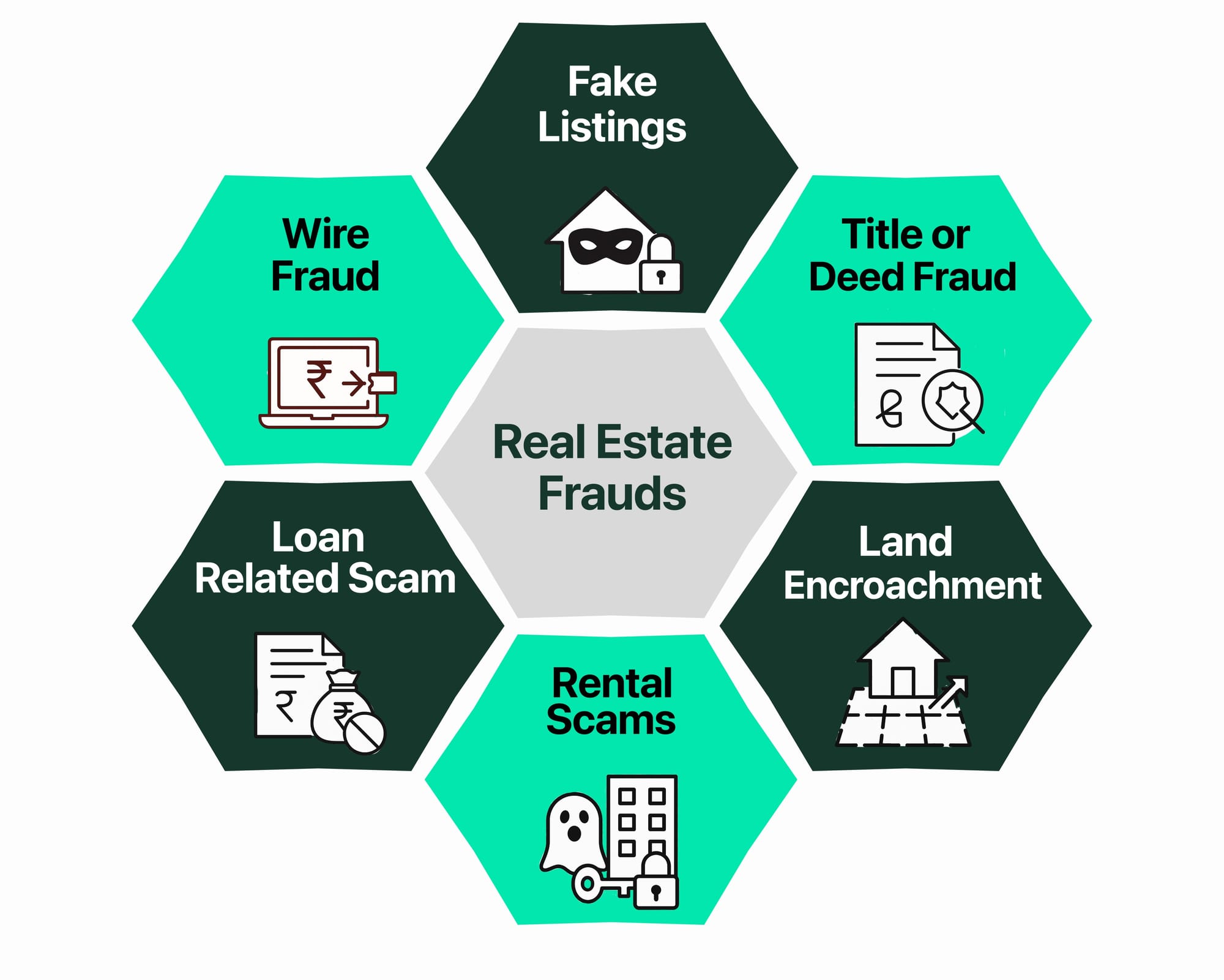
Wire-fraud/business-email compromise
Fraudsters intercept email threads between buyer, agent, and lawyer and send fake bank account details at the last hour, diverting closing funds to their accounts. This is one of the largest single sources of loss in real estate transactions globally.
Best practice: never change wiring instructions by email alone; confirm by phone using a known number.
Fake Listings and Identity Scams
Fraudsters post attractive listings (often copied photos) and ask for advance booking amount or security deposit before the buyer of tenant visits the property. Many use AI-generated images or re-use photos from real projects. Always view in person and verify ownership documents.
Title or Deed Fraud
Fake or forged title deeds, doctored mother deeds, or duplicate registrations can transfer or encumber a property without the real owner's knowledge. A missing encumbrance certificate or an unverified title history is a major red flag.
Rental Scams
Scammers pose as landlords, take advance rents/deposits and disappear. Sometimes the real owner is unaware and hasn't authorised rentals. Never pay before meeting the landlord, checking ID, and signing a lease registered where required.
Loan-Related Scams
Fraudsters promise instant loan approvals, foreclosure rescue or lower EMI schemes for an upfront fee, then vanish. Banks do not ask for advance fees to approve loans; verify offers directly with the lender.
Land Encroachment and Illegal Sale of Plots
Sellers sometimes market land that is a government land, protected zone or already under litigation/encumbrance. Check municipal plans, revenue records, and whether the land has conversion/permission for proposed use.
How to Avoid these Scams
- Work with licensed, verifiable professionals:
- Use registered real estate agents, lawyers and chartered valuers. Ask for registration numbers, ID and office address.
- Prefer developers with verifiable track record, check RERA pages and past project delivery. Many state RERAs make promoter histories public.
Explore: What is RERA Act and why is it important?
- Verify every document:
Before transferring funds, verify:
- Title deed/ mother deed/ chain of ownership (examine past transfers)
- Encumbrance Certificate (EC): shows mortgages or liens
- Sale agreement and registered sale deed (final transfer happens on registration)
- Approved building plan, completion certificate and occupancy certificate (OC) for apartments.
- RERA registration number and project details for new launches.
- Property tax receipts/utility bills to confirm continuous ownership and no dues. Authoritative checklists and sample documents are available from legal and mortgage advisory sites.
- Use safe payment channels (escrow, certified bank transfers):
- Never pay large amounts in cash or to personal accounts: Use bank transfers, cheques or RBI approved escrow/payment mechanisms for project bookings.
- For high-value transfers, use escrow accounts or lawyer-held trust accounts where funds are released on contractual milestones. Escrow reduces diversion risk and is encouraged by banks and regulators.
- Stop and verify wiring instruction changes:
If wiring instructions change within 48 hours of closing, call your lawyer or bank using a previously verified phone number and confirm the new details. Large institutions recommended voice confirmation as standard anti-fraud practice.
- Do a simple forensic check on online listings:
- Reverse-image search listing photos (Google Images) to see if they are copied.
- Check if the listing appears on multiple portals with different contact details, that’s suspicious.
- Insurance companies and portals publish alerts about AI-generated and cloned listings.
- Be cautious with Power of Attorney (PoA)
PoA can speed transactions for absentee buyers but is also abused. Limit PoA scope, use specific, time-bound language, and register and notarise PoA in the seller's presence with independent legal advice. When possible, prefer to be present for registration.
- Check land use, zoning and approvals before buying plots
- Verify and classification (agricultural, residential, industrial) at the local revenue office. Confirm conversion/permission for sale in urban limits. Municipal portal records, land-use maps and sub-registrar records help here.
Explore: 5 Mistakes people make when buying their first property
Advanced Checks for Extra Safety
- Search the sub-registrar records: An encumbrance or prior sale will show up here. Physical inspection of the registrar’s office or online searches (where available) is essential.
- Get a legal title report: A lawyer can obtain a brief title opinion that flags issues like pending litigation, disputed inheritance, or forged conveyances.
- Survey and geo-tagging: For plots, perform a fresh survey and check survey numbers against government records and municipal maps.
- RERA & registration cross-check: Confirm project RERA details with the state RERA portal and verify the project’s registration number appears on all advertisements (many states now require the RERA number to be shown). Recent state actions are tightening this rule.
If You Suspect a Scam, Immediate Steps to Take
- Stop payments immediately and notify your bank with transaction details. Banks can sometimes recall or freeze transfers if notified fast.
- Collect evidence: Emails, payment receipts, screenshots, listing URLs, IDs of the other party.
- File and FIR at your nearest police station and also file a complaint on the National Cyber Crime Reporting Portal (cybercrime.gov.in). Cyber cells handle online and wire frauds.
- Lodge complaints with regulators: RERA for developer malpractices, the state sub-registrar for duplicate registration complaints, and consumer courts for deficiency of service. Where payments involved payment aggregators or gateways, report to the bank and the RBI grievance channels.
- Engage a lawyer experienced in property/cyber frauds and consider civil remedies and criminal prosecution as advised.
Red Flags: Walk away if you see any of these
- Seller refuses to meet or show original documents in person.
- Pressure to "book now" with non-refundable advance, especially if the developer/project lacks RERA.
- Payment only by cash or to an unrelated personal account.
- Multiple listings with different prices and account details.
- Documents with inconsistent names, missing stamps or mismatched survey numbers.
Technology & Policy trends helping buyers
- States are beginning to link property-registration portals with RERA and land records to prevent duplicate sales. Maharashtra's proposed integration is one example. Greater digitalisation of land records and registrations should reduce fraud over time.
- RBI and regulators are strengthening rules for payment aggregators and escrow norms, which improves transactional safety in the medium term.