How Much Capital Do You Need to Invest in Mumbai Real Estate?
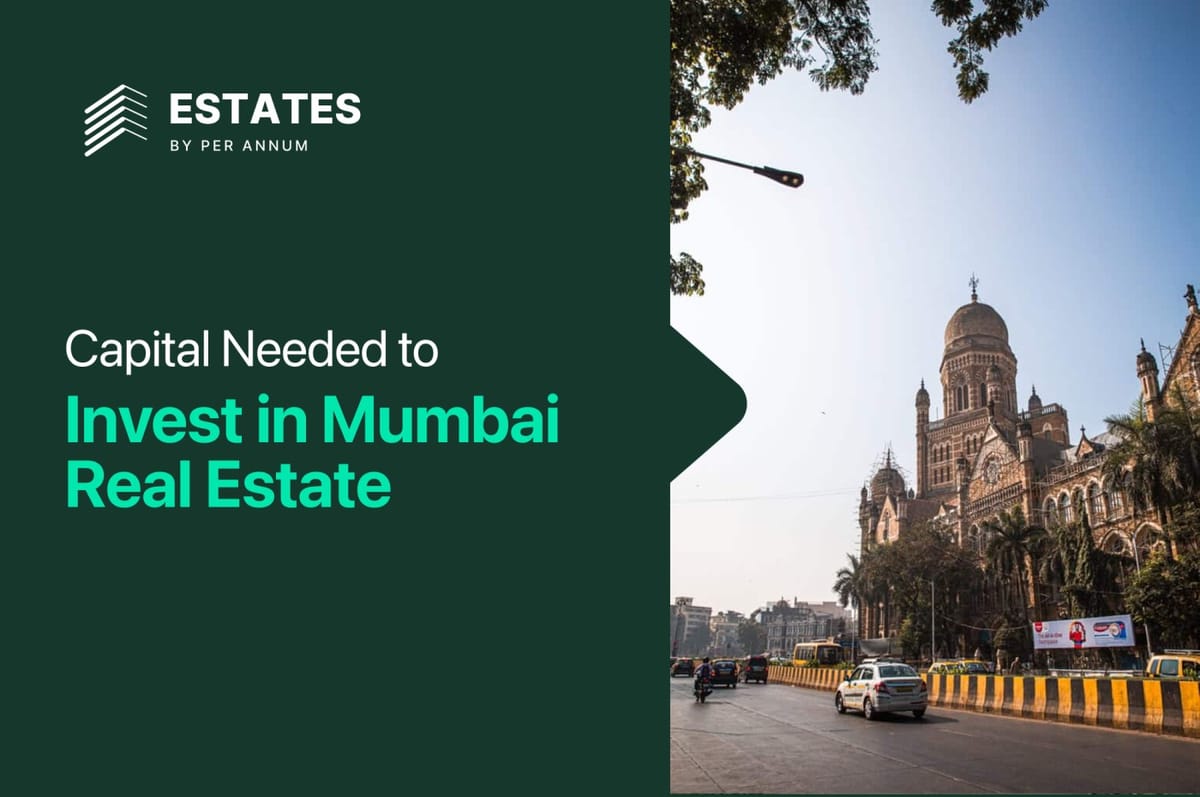
Mumbai occupies a unique position in India’s real estate landscape. As the country’s financial capital, it combines high-income employment, limited land availability, and continuous migration. These structural factors have made Mumbai one of the most expensive residential markets in Asia, with entry barriers that are significantly higher than most Indian cities.
For investors, the critical question is not whether Mumbai property holds value, but how much capital is realistically required to enter the market without compromising investment quality. The answer depends on location, asset type, and the role the property is expected to play in the portfolio.
Understanding Why Mumbai Requires Higher Capital
Mumbai’s real estate prices are driven less by speculative expansion and more by scarcity. Unlike cities that grow outward with large land parcels, Mumbai’s geographic constraints and redevelopment-driven supply mean that demand consistently exceeds new availability. This structural imbalance supports prices even during slower market cycles.
As a result, capital requirements in Mumbai are meaningfully higher, and under-budgeting often leads to compromised location or liquidity risk.
Entry-Level Investment: ₹75 Lakh to ₹1.25 Crore
This budget range typically allows access to Mumbai’s outer suburbs and extended urban areas. These include regions such as Mira Road, Bhayandar, Vasai-Virar, and certain Navi Mumbai pockets that benefit from Mumbai-linked employment demand.
Properties in this category are usually compact one-bedroom units or older resale apartments. Rental demand exists because these locations cater to a large working population seeking affordability, but yields are modest. Capital appreciation is usually tied to infrastructure upgrades, such as metro connectivity or road improvements, rather than organic market premium.
This segment suits investors looking for entry exposure rather than aggressive returns.
Mid-Segment Investment: ₹1.25 Crore to ₹2.5 Crore
The ₹1.25-2.5 crore range represents the core of Mumbai’s residential market. Within this bracket, investors can access established western and central suburbs such as Andheri, Goregaon, Malad, Kandivali, Ghatkopar, Chembur, and select micro-markets in Powai.
Properties here benefit from proximity to commercial districts, transport networks, schools, and healthcare facilities. This creates consistent rental demand and strong resale liquidity. From an investment perspective, this segment offers the most balanced combination of income generation, demand stability, and long-term appreciation.
Most institutional and end-user transactions occur in this band, making it relatively resilient during market slowdowns.
Upper Mid and Premium Investment: ₹2.5 Crore to ₹5 Crore
This capital bracket allows investors to enter premium neighbourhoods where supply is restricted and buyer quality is higher. Locations such as Bandra East, parts of Juhu, Lower Parel, Upper Worli, and Powai’s premium developments fall into this category.
Investments at this level are driven more by capital preservation and asset quality than rental yield. Tenants are typically corporate executives or expatriates, which supports rental stability but limits yield upside. Appreciation tends to be steady rather than dramatic, supported by scarcity and strong brand value of the address.
This segment is well suited for investors with longer holding periods and surplus capital.
Luxury and Ultra-Luxury Segment: ₹5 Crore and Above
Real estate above ₹5 crore in Mumbai operates in a different ecosystem. South Mumbai, Worli Sea Face, Bandra West, and Altamount Road are defined by extremely limited supply, elite buyer profiles, and long-term wealth preservation strategies.
Returns in this segment are not measured in yield percentages but in capital security, prestige, and legacy value. Liquidity exists, but the buyer pool is narrower. These assets are typically unsuitable for yield-focused investors and more appropriate for high-net-worth individuals with diversified portfolios.
Additional Capital Requirements Beyond the Property Price
In Mumbai, the purchase price is only part of the capital commitment. Buyers must also account for stamp duty and registration charges, brokerage fees, society deposits, and interior or furnishing costs if the property is to be rented.
In practice, these expenses add approximately 8-10 percent to the headline property price. Ignoring these costs often leads to cash-flow strain post-purchase.
Is Lower-Capital Entry into Mumbai Possible?
Direct ownership in Mumbai requires substantial capital, which has led many investors to explore fractional ownership that allow participation in high-quality residential assets without committing crores upfront. These models focus on residential demand and are designed for investors seeking exposure rather than ownership responsibilities.
Such structures can help diversify capital while maintaining Mumbai-linked exposure.