How Fractional Real Estate is Reshaping the Future of Indian Real Estate
Owning a home has always symbolized personal success in India. For decades, it’s been both an emotional milestone and a financial goal. As India’s economy matures and its workforce evolves, with a surge in first-generation entrepreneurs, tech professionals, and remote workers, the appetite for high-end real estate has risen sharply. Luxury and ultra-luxury residential properties have seen unprecedented demand, and so have the profits for those who got in early.
In top-tier locations like Mumbai, Bangalore, Delhi-NCR, and Pune, residential and commercial assets have appreciated over 300-500% over the last decade. These gains, however, have mostly gone to institutional players or ultra-high-net-worth individuals who could afford to participate in this segment.
But here’s the irony: the very people contributing to India’s growth, aspiring professionals, millennials with growing disposable incomes, NRIs seeking safe assets back home, have largely been priced out of the real estate boom they helped create.
What if the same group could also benefit from this growth without needing to invest crores? What if real estate was no longer a gated club but an open platform?
That’s the promise, and potential, of Fractional Real Estate.
So, What Is Fractional Real Estate?
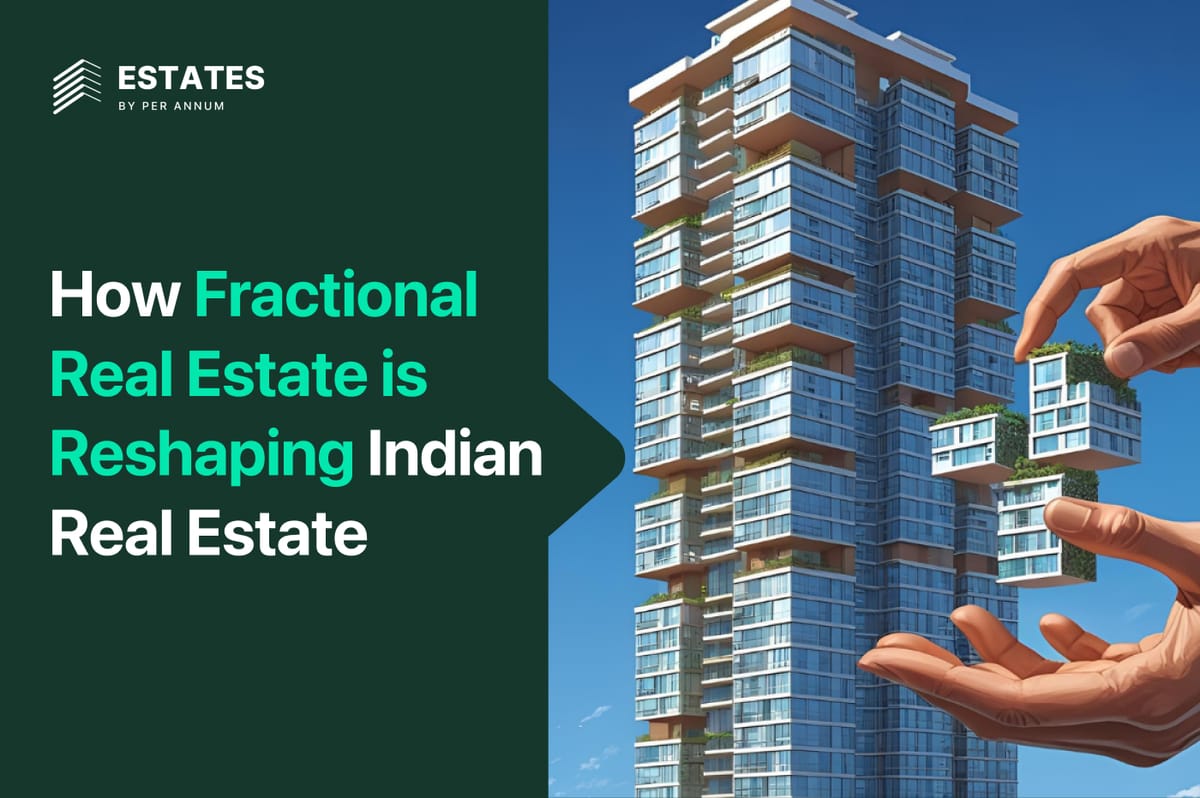
Fractional ownership allows you to buy a fraction of a premium property, be it a residential apartment or a commercial office space, without the need to buy it outright. You co-own the property with others and benefit from its long-term appreciation.
If the concept sounds unfamiliar, you’re not alone. We’ve broken it down fully in this detailed blog on fractional ownership, covering everything from legal structure to exit options. If you’re curious, start there. Here's the link : What is Fractional Real Estate and How does it work?
Globally, this model is already shaping major real estate markets, from high-end condos in Dubai to commercial blocks in London. India, with its growing appetite for alternative assets, is following suit.
Why Now? Why India?
India’s timing couldn’t be better. Three key shifts are aligning:
- Trust in Real Estate Remains Strong: For most Indian investors, real estate still offers unmatched emotional and financial reassurance. Even first-time investors often prefer a physical asset they can relate to.
- Affordability Gap Is Widening: While the desire to own high-value property is rising, affordability hasn’t kept pace. Fractional ownership bridges that gap, allowing access to assets previously reserved for the wealthy.
- Tech and Regulation Are Catching Up: Digital platforms and regulatory interests are making it easier to participate transparently. The rise of structured platforms like Estates, offering fractional ownership in curated properties, is evidence that the ecosystem is maturing.
What Makes Fractional Real Estate Different?
- Lower Entry Barriers, Wider Access
Traditionally, owning property in top urban markets has required crores in capital. Fractional ownership changes that. With contributions starting from ₹10–25 lakhs, individuals can now participate in premium real estate opportunities that were previously out of reach. - Broader Participation Through Diversification
Instead of tying up large sums in a single property, fractional models allow you to spread your capital across different types of real estate across cities and categories. It’s a way to explore multiple opportunities without overcommitting to just one. - Ownership Without the Operational Overload
Paperwork, upkeep, and administrative tasks often make real estate ownership complex. With fractional platforms, these aspects are typically handled by professional asset managers, making the experience smooth and largely hands-off for the participant. - Access to High-Quality, Curated Assets
Fractional real estate opens the door to select properties, like ultra luxury residences in prime areas of Gurgaon, Mumbai or Bangalore or even across the sea in Dubai or any other country, that are usually costs ₹10-20 Crores for a unit. - Digital Transparency and Simplicity
From property documentation to performance dashboards, today’s fractional platforms offer clear, tech-enabled access to all the details. It’s a step toward making real estate simpler, more transparent, and easier to understand.
Our new product, Estates, also offers Smart Fractional Real Estate built to make participation in real estate simpler and more accessible than ever. Click the linked text if you'd like to explore how fractional real estate works at Estates and how it fits into your investment strategy.
Real Estate Investment Trusts (REITs) are also a route to real estate exposure, but they operate more like mutual funds and are listed on stock exchanges. While liquid and regulated, they don't offer direct property-level ownership, and returns can be influenced by market sentiment more than asset fundamentals.
Fractional ownership also comes with its own set of risks and limitations. Properties can underperform, exits may take time, and each platform has its own approach to compliance and transparency. As this is still an emerging space, due diligence is essential. Understand the asset, the platform, and your own goals before diving in.
India’s real estate market is evolving, but its most exciting shift may not be in construction, but in access. Fractional ownership doesn’t replace traditional real estate investing; it redefines who gets to participate.
For a long time, prime real estate has been an exclusive club. Now, the doors are slowly opening, and models like fractional real estate are reshaping how Indians create wealth through Real Estate.